
I read Andy Weir’s Project Hail Mary over a year ago and loved it. I loved The Martian and PHM had the feel of a sequel. All the elements that worked in The Martian are there—an isolated main character (Ryland Grace in PHM, Mark Watney in The Martian) with no game plan for survival up against impossible odds must “science the shit“ out of every challenge. My thoughts at the time were that a second book with that formula was fine, but a career of such books would be less great.

The structure of the book was also similar because it cuts back and forth between problem solvers on Earth and the MC on his own. In PHM, the problem solvers are in the past, and Grace is one of them—the cuts are between the present and flashbacks. The need for this is that his long space voyage necessitated an induced coma, which produced the side-effect of amnesia. And this works for the story, even if it ignores a fairly well-understood rule of writing: Don’t start with the MC waking up with amnesia.
But, like The Martian, Grace’s struggles and problems to solve quickly consume the reader’s mind and eliminate all such concerns. He has a sun-eating organism to defeat. The astrophage. I loved the concept of an organism that ate radiation and stored the energy as mass, only to convert the mass back to energy to travel to a CO2-rich environment (Venus) to spawn. It’s a wonderful science fiction idea.
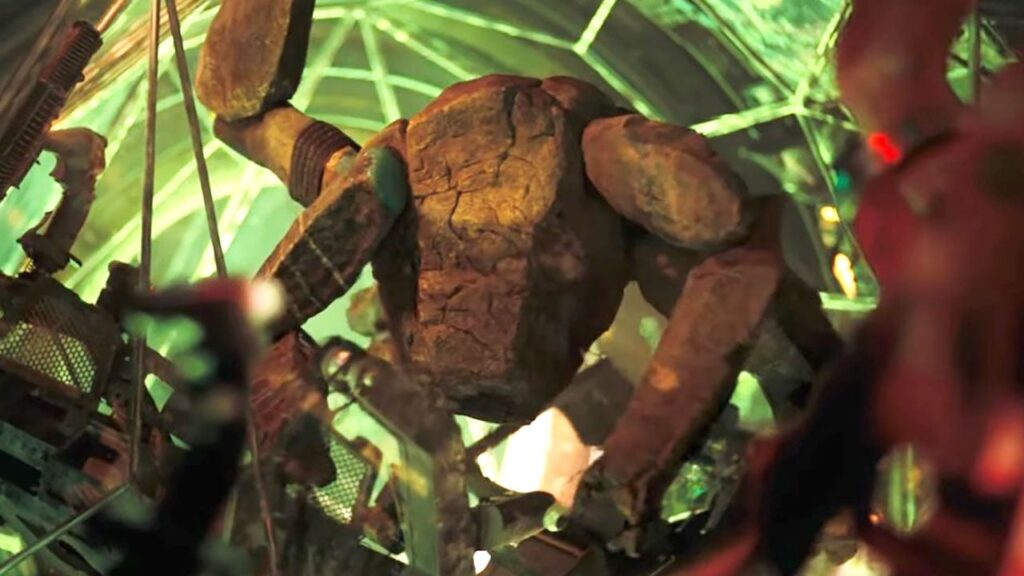
Luckily Grace is met at his destination by another alien ship sent on the same mission. The sole survivor is a crab-like alien made of rock that Grace names Rocky. And it’s Rocky that saves PHM from being a carbon copy of The Martian. Rocky is a wonderfully developed character, and the relationship developed between the two astronauts is really the secret sauce that allows the reader to see past any choices Weir might have made that would have otherwise raised a cynical eyebrow.
So, all that said about the original text, I had concerns about the film adaptation. I knew it was in the steady hands of Drew Goddard. I knew it was directed by the most audience-pleasing directors possible—Phil Lord and Christopher Miller. But I still had doubts going in. Would it be too much of The Martian take 2? Would the amnesiac flashback structure work in a film? How could they dumb down the energy-eating astrophage and how would that affect the plot? Would Rocky end up being a Muppet?
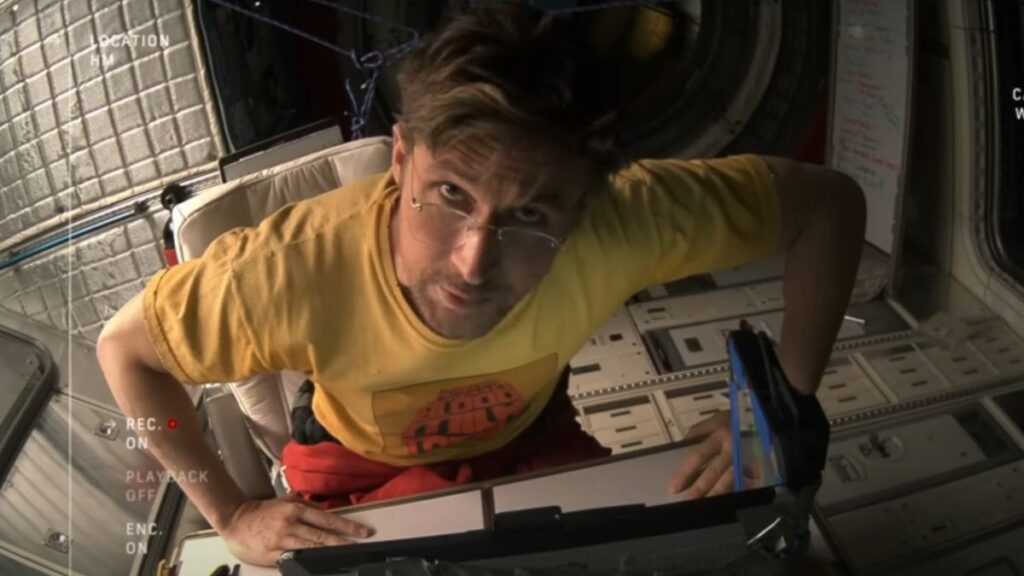
None of those concerns were realized.
Rocky (James Ortiz for puppetry and voice) is the best alien representation in film history as far as I’m concerned. His charm and unique physiology from the book are not diminished. His rock-like exterior and spider/crab-like body feel alien and familiar—though I suspect the familiarity stems from the enthusiastic performance.
The astrophage was simplified. They omitted any proper explanation of the organism’s ability to convert energy to mass and mass to energy. They just discussed the highly energetic effects of that without discussing the mechanism. There were a few times when that handwavyness was a little confusing, but nothing serious, and the plot was left intact.
The amnesiac/flashback structure holds up. In fact, it feels like it worked less well in the book, as if Weir was writing for the eventual screenplay. More on that later.
Finally, I think Ryan Gosling is spared too many comparisons to Matt Damon’s Mark Watney by Rocky. Grace doesn’t have to surmount his challenges alone. The relationship between the two alien astronauts forms a very different heart for this film. It still will remind the viewer of The Martian, but it’s not a carbon copy.
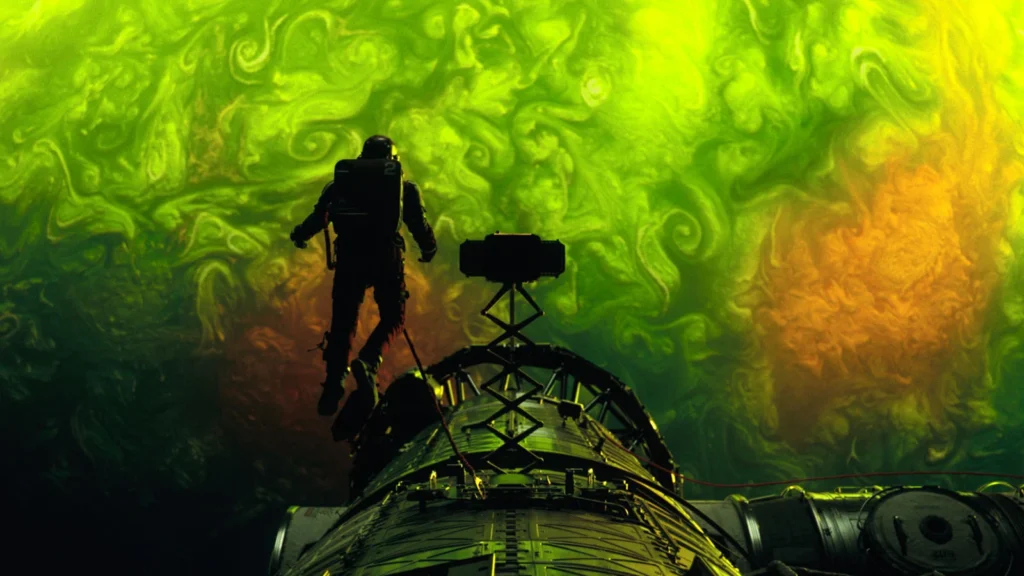
What I was left with was how beautifully this film had been adapted from the book. The bits they left in, the bits they left out. It feels very much like nothing was added or lost—which is an excellent illusion and difficult to pull off. Some of the science morsels were accomplished off stage, but they were there—enough to establish the science but allow the story to stay focused on the characters. The Drew Goddard script gives the directors room to play with Gosling’s talent for physical comedy and the effects team’s remarkable creation of Rocky.
But a lot of the credit for the adaptation to film goes to Andy Weir. One imagines he watched the adaptation of The Martian with the eyes of a student and absorbed a ton. He took away lessons on how to write a story for the movies, and PHM is his response.
In my opinion, he was wildly successful.
5 out of 5 stars.
⭐️⭐️⭐️⭐️⭐️