
I am oldish.
I know, right? I don’t know how that happened either. I mean, it sneaks up on you. Slowly, age takes things away . Like drinking and staying out late. At some point, your body punishes you too much and you decline invitations to dance the night away in careless alcoholic blurs. Your metabolism slows down, and you have to give up your daily fix of sugary sodas and Snickers. And don’t get me started on sex.
Inch by nearly unnoticeable inch, age shaves the corners of your life until you wake up one morning with a car insurance premium you can afford, a mortgage that is mostly paid off, and a bedtime before the late news broadcasts.
This is fine.
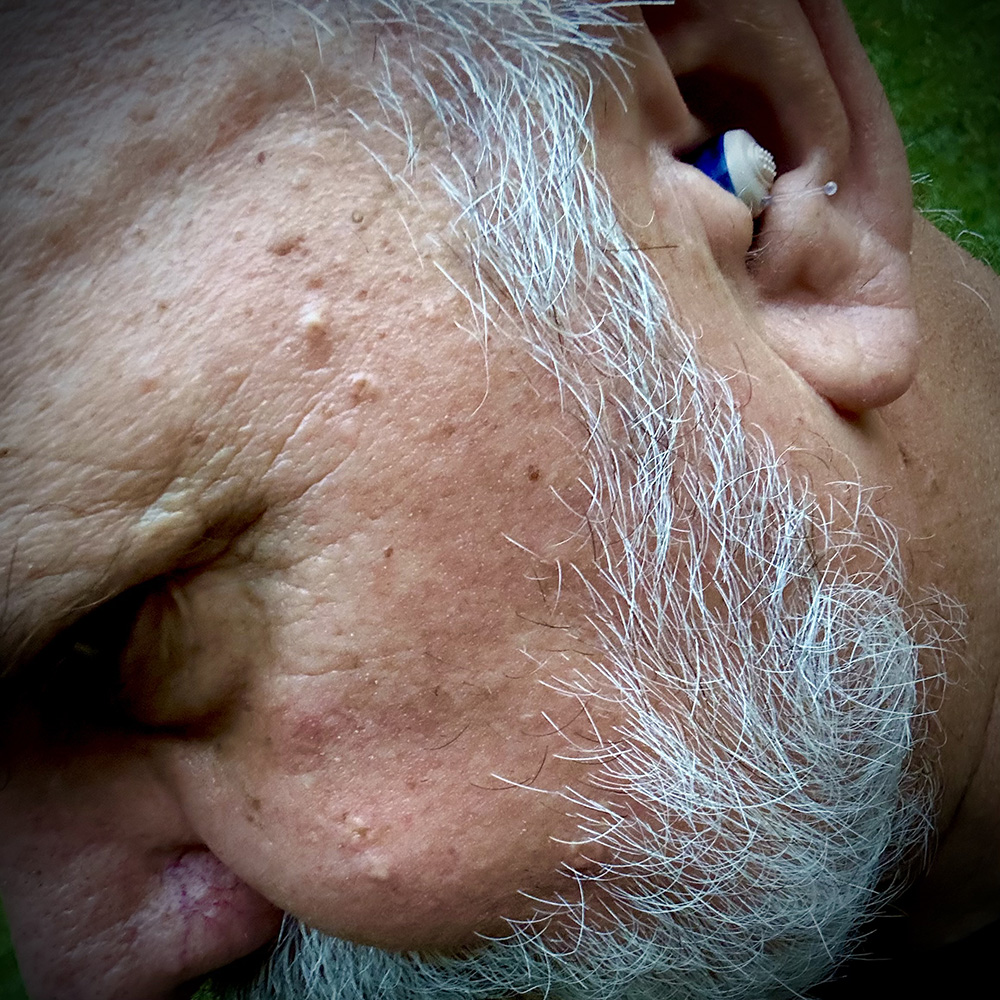
Honestly, the only thing that really bothers me is this latest insult. Last week I bought a pair of over-the-counter hearing aids. It had been a long time coming. I first noticed my hearing loss over a decade ago when, in office situations—mostly when people were trying to whisper a sensitive bit of gossip—I found I couldn’t hear them from a few feet away. I moved closer to hear. I said, “Huh?” or “What?” more often.
I could hear everything else just fine. Age was slowly shaving off a few decibels at a few frequencies here and there. The pandemic made it easier, actually. All my meetings were on Zoom with headphones. All my personal conversations were via text. My hearing was fine around the house. I just turned the volume up more often—but isn’t that true of everyone now complaining about the audio quality of streaming platforms?
Recently, I started spending more time around family, and the huhs and whats were so frequent—or worse, I simply missed what was said—I decided it was time. It’s a good time for hearing aids because they’re easy and relatively inexpensive to buy. You don’t need a prescription. I ordered mine online. They’re tiny, discreet, and do the job.
And I hate them.
Here’s the thing: acoustics are not optics. If one’s vision needs correction, a pair of glasses or contacts can adjust the focus of the light hitting your retina with absolute precision. Corrected vision is exactly the same as that of a person with no need for correction. It’s transparent to the user. They just see better. This is down to the science of optics.
The science of acoustics is not the same. There is no seamless, transparent correction for hearing loss. The only solution is to pump up the volume. Thus, hearing aids are tiny speakers driven by tiny amplifiers with tiny microphones sticking out of your ears. There are some that come with an app that allows you to adjust the gain on different frequencies of sound, but most just bump all the frequencies up globally.
Acoustics and optics are not the same.
Imagine correcting vision by mounting a standard-definition video display in front of your eyes at a distance you can see and feeding it a signal from a forward-facing camera. You could see near and far, but the image would be sort of shit.
This is the basic model used by OTC hearing aids. I can hear whispers now. I get all the data I was missing—which was a LOT. But I get it in a rough wool blanket of audio. It doesn’t sort out the sounds the way my brain does. I hear the air-conditioner. I hear the steps squeak, and I hear the piss hitting the water in the toilet. No nuance, all signal.
Some of the noise is canceled, thankfully. The blender doesn’t get a boost, nor do car engines. But my office mini-fridge now has a sound that I never knew about. I’m awash in a world of hums, creaks, snaps, crackles, and pops.
I don’t say, “Huh?” very often. I don’t say “What?” with the same frequency. The people in my life don’t need to repeat themselves. I am, I guess, less of a nuisance. It feels like this assistive technology is more of an assistance to them. That’s fine.
I have noticed the tendency to find an excuse to go for a ride and listen to my audiobooks with my hearing aids out. I relish the times when I can pull the things out of my ears and pop them into their charger case. I enjoy the quiet world. I imagine it’s something similar to what a woman feels when she can, at the end of her day, take off her bra.
That’s an apt metaphor because bras aren’t worn by women for women. They’re worn for everyone else. This is my experience with hearing aids. At my level of hearing loss, I can get by without them—but it makes me a nuisance. So, every morning now, in they go.
I’m doing this for you.